





In the realms of reproductive medicine and cryobiology, cryopreserving oocytes and embryos is often described as hitting life's "pause button." At its scientific core, however, this technology is a sophisticated orchestration of water dynamics—a delicate balancing act required not only during Fastvitrification but, even more critically, during the thawing process that awakens life.
Traditional slow-vitrification methods frequently caused irreversible damage to delicate oocytes and embryos due to lethal ice crystal formation. The advent of Ultra-Fast Vitrification (UF-VIT) completely changed the game. The secret to its success lies in its ability to precisely identify and differentially regulate the two distinct states of intracellular water: Free Water and Bound Water.
Chapter I: Understanding the Two States of Intracellular Water
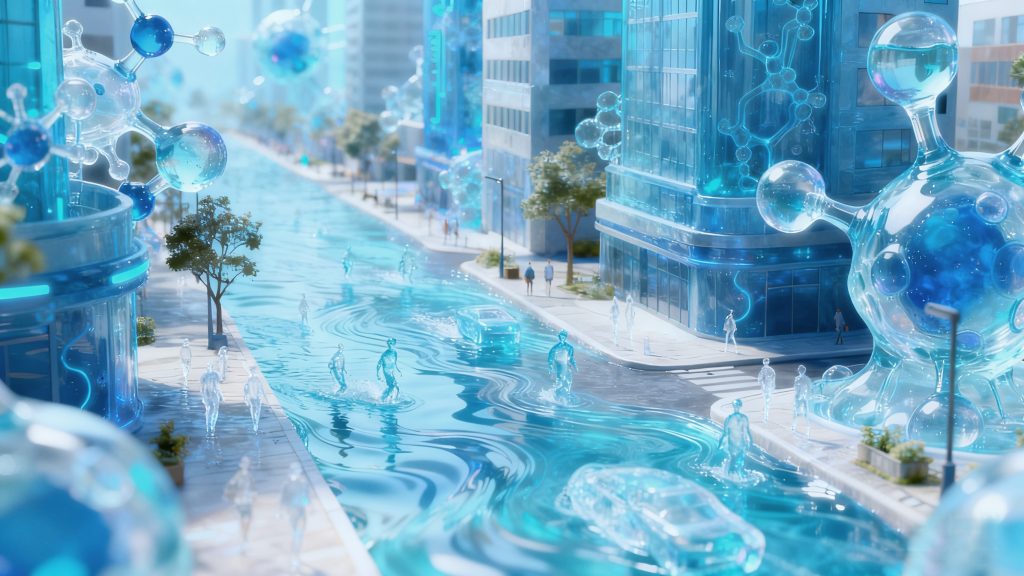
To conceptualize the micro-environment of a cell, imagine it as a highly functional, miniature metropolis:
Free Water (The Dynamic Infrastructure):
This represents the freely moving traffic and individuals on the city streets. Free water is the primary solvent for life and participates in metabolic reactions. However, when the temperature drops, it is highly prone to vitrification , turning into sharp, blade-like ice crystals that can tear the cell apart from within.
Bound Water (The Structural Blueprint):
This water is chemically bound to the city's skyscrapers—the cellular proteins and membranes. It maintains structural integrity and stability. Because it is highly ordered, bound water does not easily freeze; it acts as the immutable foundation that keeps the cellular architecture intact.
The ultimate goal of any advanced cryopreservation protocol is clear: prevent the "dynamic infrastructure" (free water) from turning into destructive ice blades, while fully preserving the "structural blueprint" (bound water).
Chapter II: Ultra-Fast Vitrification – A Precision Strike
Traditional vitrification operates like a crude, city-wide lockdown—a slow process plagued by high risks of ice damage and severe chemical toxicity.
In contrast, Ultra-Fast Vitrification (UF-VIT) functions as a targeted, precision operation:
1.Intercepting the Critical Windows: The "Minimal Volume Point"
Biophysicists have established that when a cell is exposed to cryoprotective agents (CPAs), it initially dehydrates and shrinks. At approximately the 60-second mark, the cell contracts to its minimal volume point [1]. This critical milestone signifies that the vast majority of hazardous "free water" has been successfully driven out of the cell, opening the optimal window for vitrification.
2.The Flash Transition: Instant Vitrification
Seizing this brief, transient window, embryologists plunge the sample into a high-concentration vitrification solution. The remaining free water combined with the CPAs instantly transitions into a high-viscosity, amorphous glass state. It is as if the cell is suddenly suspended in a flawless "amber," completely eliminating the thermodynamic possibility of ice crystallization.

Chapter III: Seamless Warming – The Precision Awakening
Ultra-Fast Recrystallization Avoidance
Just like vitrification , warming must occur at lightning speed. Once removed from liquid nitrogen, the sample is immediately immersed in a pre-warmed warming solution at 37 ℃, achieving a warming rate of tens of thousands of degrees per second. This flash transition propels the cell past the "critical temperature danger zone" where devitrification (ice recrystallization) can occur, allowing the glass state to melt safely back into a liquid state without cellular damage.
The One-Step Method: Synchronized Osmotic Control
Traditional warming relies on tedious, multi-step gradient dilutions, exposing cells to prolonged osmotic stress. The advanced One-Step Warming Method introduces a more refined approach:
Synergistic, Non-Sequential Kinetics: The cell is placed directly into a meticulously formulated hypertonic system (e.g., a 1 M sucrose solution). This environment generates a powerful osmotic driving force that rapidly draws CPAs out of the cell. Simultaneously, the cell membrane’s high water permeability allows controlled influx of water to begin concurrently.
Chapter IV: Dual-Water Alignment – Coordinated Protection
Throughout this high-efficiency "pause and resume" cycle, the fates of both states of water are meticulously managed:
Free Water is the Controlled Variable: During vitrification, it is systematically managed to transition from a potential hazard into a protective glass matrix. During warming, its re-entry is precisely guided to restore cellular vitality in an orderly fashion.
Bound Water is the Preserved Constant: The true success of ultra-fast technology lies in its ability to leave bound water virtually "undisturbed." By maintaining its stability from start to finish, the technology protects the architectural framework of the cell, providing a solid foundation for life to resume.
Conclusion
Ultra-Fast Vitrification and Warming represent a masterful fusion of biology and physical chemistry. It marks a shift from a brute-force struggle against nature to an elegant, rational guidance of the microscopic world.
By carefully choreographing the behavior of both free and bound water molecules through life's suspension and reawakening, we can reliably protect cellular potential and secure the hope of future life.
References
Gallardo M, Saenz J, Risco R. Human oocytes and zygotes are ready for ultra-fast vitrification after 2 minutes of exposure to standard CPA solutions. Sci Rep. 2019 Nov 5;9(1):15986.